Many parents throw aside the idea of tough love in favor of over-sheltering their kids because let’s face it, we live in a scary and harsh world. It’s natural for parents to hold those littles tightly and closely, but that helicopter approach could be damaging your child.
How do you know if you are over-sheltering?
If you’ve ever hovered at the playground to prevent your child from falling, double-checked their homework after bedtime, or stepped in to fix a problem before they even asked, you could be laying it on too thick.
“Every parent wants their child to feel safe, happy, and successful. But sometimes, those loving instincts can unintentionally hold children back.” -Marci Gabriel
Over-sheltering, or protecting children from all discomfort, disappointment, or challenge can interfere with how kids learn to handle the real world. It’s a natural impulse to protect, but when we step in too often, children miss out on learning vital life skills like problem-solving, resilience, and confidence.
This article explores what it means to over-shelter, what happens when parents are too protective, how to recognize it, and what you can do to raise capable, confident kids, especially if your child has special needs or learning differences.
What It Means to Over-Shelter
Children need protection and structure. But there’s a difference between being supportive and being overprotective.
Supportive Parenting: means encouraging independence while being emotionally available. You guide, coach, and let your child try even if they make mistakes.
Sheltering Parenting: means removing obstacles, doing tasks for them, or preventing any form of struggle.
Some common examples include:
Doing your child’s homework or fixing their project.
Intervening in every peer conflict instead of letting kids problem-solve.
Avoiding age-appropriate risks like new sports or trying out for other activities.
Making every choice for them like what they should wear, what food to eat, and friendships
In many cases, sheltering comes from parental anxiety that is from the real fear that your child will suffer, fail, or be judged. But ironically, shielding kids from life’s bumps and bruises can make those very outcomes more likely later in life.
The Research: Why Over-Sheltering Hurts
Science has a lot to say about what happens when children aren’t given space to fail or struggle.
Resilience and Coping Skills Suffer: Children develop resilience like the ability to bounce back by facing manageable challenges. When parents smooth out every difficulty, children don’t get to practice recovering from small setbacks. A 2018 study from the American Psychological Association found that children with overprotective parents were more likely to develop anxiety, depression, and difficulties regulating emotions. Without exposure to healthy challenges, their stress response systems never learn to calm down after adversity.
Delayed Independence and Self-Regulation: A 2022 study published in Developmental Psychology linked overprotective parenting with delayed emotional and behavioral self-regulation in adolescents. Children who never practice autonomy often struggle to manage frustration or make healthy choices once parental oversight lessens.
Signs You Might Be Over-Sheltering
There’s no shame in recognizing yourself in these examples because awareness is the first step toward change. Here are some signs your protective instincts might be tipping toward over-sheltering:
You step in before your child has a chance to try or struggle.
Your child often says, “I can’t” before attempting something new.
You feel intense anxiety when your child is upset or uncomfortable.
You avoid letting your child experience disappointment, frustration, or failure.
You regularly make decisions your child could make for themselves.
Teachers mention your child has difficulty self-advocating or managing tasks independently.
These signs don’t make you a bad parent. They simply mean it might be time to gently step back and let your child step forward.
The Consequences for Over-Sheltered Kids
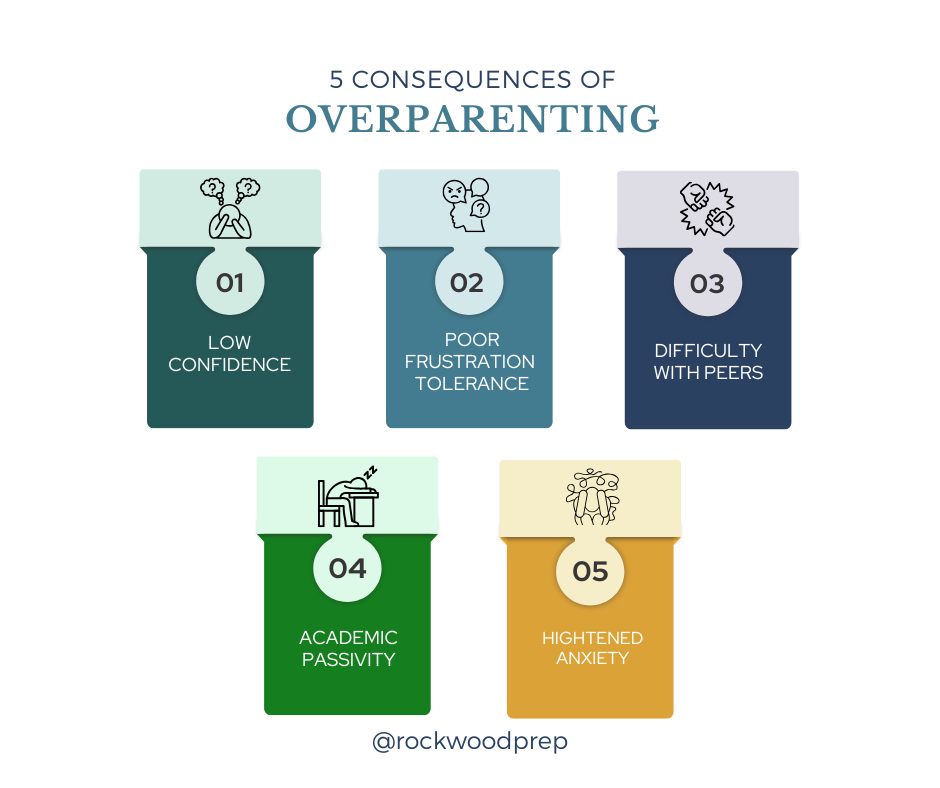
Children who grow up overly protected may face challenges that follow them into adolescence and adulthood. This chart shows five tough consequences for kids who live with over-sheltering, also known as overparenting.
Low confidence: They doubt their ability to manage on their own.
Poor frustration tolerance: Small setbacks lead to big emotions or avoidance.
Difficulty with peers: They may expect adults to solve social conflicts or struggle with resilience after rejection.
Academic passivity: They rely on adults for direction and reassurance instead of thinking independently.
Heightened anxiety: The world feels overwhelming or unsafe because they’ve had limited practice handling discomfort. If kids never get to “test drive” independence in small ways, the real world can feel far scarier than it is. It’s your job, as a parent, to give them opportunities, within reason, to fail or fly, without your intervention.
Special Considerations for Children with Learning Differences or Special Needs
Parents of children with autism, ADHD, dyslexia, or other learning differences often face a delicate balance. You naturally want to protect your child from discouragement, bullying, or sensory overwhelm. That’s why advocacy and structure are vital but so is allowing them to develop independence within their own abilities.
The truth is, sheltering these children too much can unintentionally communicate that they can’t do things for themselves. Research supports a middle path called, autonomy support. This is a space where parents guide, bridge, and encourage their children to take increasing responsibility for their own growth.
Example 1: Let a dyslexic child read aloud and praise effort, not perfection.
Example 2: Allow a child with ADHD to organize their backpack, even if it takes longer.
Example 3: Encourage a child with autism to order their own meal at a restaurant.
Each small moment of independence reinforces self-belief. The goal isn’t to remove support, it’s to adjust it as your child grows.
How Parents Can Foster Confidence and Independence
You can start creating independence right now, no matter your child’s age. Here are practical steps to help kids build confidence while still feeling supported. Start small by giving your child age-appropriate choices: which outfit to wear, what book to read, or what snack to pack. Choice-making fosters self-direction.
Encourage problem-solving. When your child faces a challenge, resist the urge to fix it. Instead, ask, “What do you think would help?” or “What’s another way we could try?” This builds problem-solving muscles and communicates trust in their ability to think.
Normalize failure. Failure isn’t the opposite of success. Failure is how we learn. Share your own stories of mistakes and what they taught you. When kids see failure as feedback, not finality, they take healthy risks.
Give responsibilities like daily chores with time management connected to them. One idea is to let them pack their own lunches, so they learn follow-through and accountability. Children thrive when they know their contributions matter, so give them a job!
Step back gradually so that your child doesn’t experience feelings of overwhelm. If your child asks for help, guide them instead of taking over. You could say, “I know you can start this, and I’ll check in when you’re done.” Gradual independence builds confidence.
Encourage safe risk-taking so that your child learns that they can do hard things. Whether it’s trying a new sport, speaking in front of a class, or inviting a new friend to play, challenge your child to stretch just beyond their comfort zone.
For neurodivergent children, independence looks different. Use visual schedules, small goals, or timers, but let them lead as much as possible. They gain a sense of control and pride in their abilities.
Model emotional regulation. Think of it this way… your calm becomes their compass. When they see you handle frustration or disappointment constructively, they learn emotional resilience by example.
You don’t have to choose between protecting your child and preparing them. The healthiest approach blends both connection with boundaries. Kids thrive when they feel both loved and trusted. Developmental psychologists call this authoritative parenting. High warmth, high expectations, and consistent support is a parenting style that is linked to better emotional health, academic performance, and confidence across cultures and ages (American Psychological Association).
The next time you feel the urge to step in, pause. Ask yourself: “Is this something my child could try on their own?” You might be surprised how capable they are when given the chance.
If your child struggles with dyslexia, ADHD, or autism spectrum disorder (ASD), the journey can sometimes feel overwhelming. The good news is that there are free resources for children with learning disabilities that can help families access information, tools, and even counseling at no cost.
Whether you’re a parent looking for dyslexia resources, or support for your student with ADHD, or specialized programs for children diagnosed with autism, this guide will point you toward trusted organizations and helpful tools.
At Rockwood Prep, we know that every child deserves the chance to succeed, regardless of their learning style. While schools and therapies may come with costs, these free resources available nationwide and here in Arizona can empower families to better understand and support their children.
Not every family has immediate access expensive programs and tutors, but knowledge, strategies, and support should never be out of reach.
That’s why free programs and organizations are so valuable. They provide:
Education for parents who want to understand their child’s diagnosis
Practical strategies for helping kids at home and school
Community connections with other families who share similar challenges
Support for children who may feel isolated or discouraged
Even small tools like free reading apps or webinars on executive function skills can make a huge difference in your child’s progress and confidence.
Free Resources for Dyslexia and Learning Disabilities
Here are some trusted organizations that provide free materials, guides, or support services nationwide:
1. International Dyslexia Association (IDA) offers a wealth of dyslexia resources for parents, including fact sheets, research articles, and free webinars. Their Dyslexia Handbook is especially helpful for families just beginning to navigate a new diagnosis.
2. Understood.org is a nonprofit dedicated to helping parents of children with learning and attention issues. It covers dyslexia, ADHD, autism, and more. You’ll find free toolkits, videos, and articles that explain learning challenges in parent-friendly language.
3. The Reading Rockets website provides free reading strategies, videos, and printable guides designed to help children with reading and spelling difficulties. Their resources are widely used by teachers and parents alike.
4. LD Online is one of the largest resources for families dealing with learning disabilities. Their site offers articles, personal stories, and expert advice on dyslexia, ADHD, and ASD. It’s a great starting point for parents seeking evidence-based information.
5. Children and Adults with Attention-Deficit/Hyperactivity Disorder (CHADD) is for families managing ADHD, CHADD provides free educational materials, webinars, and support group directories. Their resources help parents learn strategies for organization, focus, and self-regulation.
Arizona-Based Resources
While many resources are available nationwide, Arizona families also have access to free, local options that can make a big difference.
6. Encircle Families is an Arizona-based nonprofit offering free workshops, parent mentoring, and support for families of children with all types of learning differences. They are a lifeline for parents navigating special education services.
7. The Arizona Department of Education Exceptional Student Services department provides information on special education law, Individualized Education Plans (IEPs), and resources for families of children with learning disabilities. Understanding your rights and options is critical, and these guides are available at no cost.
8. Arizona public libraries including Phoenix, Mesa, Maricopa, and Pima County systems often host free reading programs, homework help, and literacy events. For children with dyslexia, these programs can provide additional exposure to books and language in a supportive setting.
Free Tools and Apps for Kids with Learning Disabilities
In addition to organizations, there are several free or freemium apps and digital tools that can support children’s learning at home.
NaturalReader: A free text-to-speech program that helps kids with dyslexia hear words while reading.
Learning Ally (limited free resources): Offers free sample audiobooks and reading guides for struggling readers.
Khan Academy Kids: A free educational app with lessons in reading, math, and executive function skills.
Nessy Reading and Spelling (trial): While not fully free, Nessy offers free resources and trials for parents exploring dyslexia-friendly programs.
SparkleBox: Find dyslexia teaching resources like visual tracking, auditory processing tools, and Rime charts.
YouTube: We like videos from Meet the Phonics, Meet the Sight Words, and Meet the Letters from Preschool Prep Company.
Using a combination of these tools can help children practice spelling, reading, and comprehension in a fun, engaging way.
Support for Parents
It’s not just children who need support. Parents of children with dyslexia and learning disabilities can also benefit from guidance, counseling, and connection. You don’t need to go through this journey feeling isolated. Have a look at these free resources that offer encouragement and clarity.
9. Parent Training and Information Centers (PTIs) Funded by the U.S. Department of Education, PTIs provide free workshops and guidance for parents navigating IEPs and school accommodations. You can find Arizona’s PTI through Center for Parent Information and Resources.
10. Don’t forget to ask about free parent information at Rockwood Prep. At Rockwood Prep, we believe that parents should have access to support as they explore options for their child’s education and therapy. That’s why we offer free parent counseling to families considering whether our school or ABA therapy services are right for them. This no-cost session gives parents the chance to ask questions, understand available support, and discover if Rockwood Prep is a good fit.
If you’re ready to take the next step in finding the right educational support, we’d love to meet you. Book a tour today or call 480-530-0886 to learn more about our dyslexia and learning disability support services.
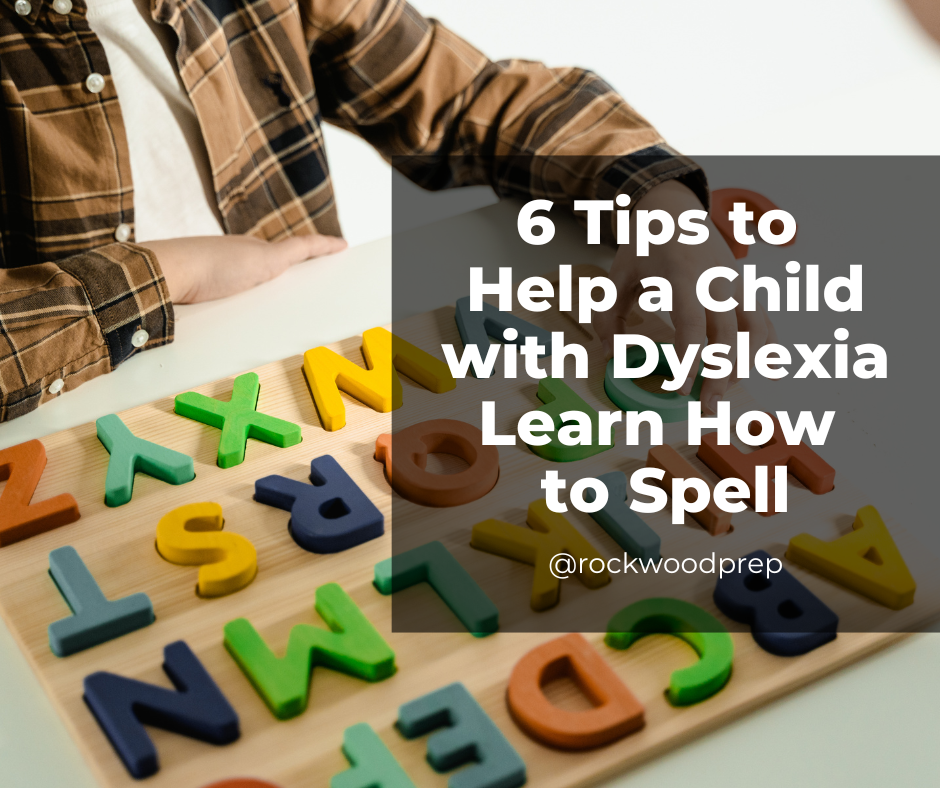
When it comes to spelling, English grammar rules and exceptions can be especially difficult for children with dyslexia to understand. You know the rhyme: I before E except after C except when it isn’t. Look at words like science, society, or species carefully. What do you notice?
No wonder children with dyslexia struggle with spelling.
But with the right strategies and support, children can gain the tools they need to build spelling confidence and succeed in the classroom.
FACT: A high percentage of misspelled words, difficult-to-read handwriting, poor organization, a lack of fully developed ideas, and/or a lack of diverse vocabulary.
How Dyslexia Affects Spelling
Dyslexia profoundly affects the critical skills required for reading and spelling. Children with dyslexia may:
Struggle to break words into sounds (phonological processing)
Mix up letters or letter order (orthographic processing)
Have difficulty storing and recalling the visual patterns of words (visual memory)
Find it hard to apply traditional spelling rules
This means that simply seeing or hearing a word may not be enough for a child with dyslexia to learn how to spell it accurately. That’s why many families turn to structured interventions and dyslexia support services in Arizona to help their children succeed.
Strategies to Help Dyslexic Children with Spelling
1) Use Multisensory Learning: Children with dyslexia often learn best when multiple senses are engaged. Instead of just writing a word on paper, encourage activities like:
Tracing letters in sand or shaving cream
Using magnetic letters to build words
Saying each sound aloud while writing it down
Tactile and auditory reinforcement helps the brain create stronger connections.
2) Teach Spelling Patterns and Word Families: Instead of memorizing long lists, help your child focus on patterns.
ight words (light, night, fight)
tion endings (nation, station, vacation)
Prefixes and suffixes (un-, re-, -ed, -ing)
Understanding these recurring chunks reduces overwhelm and helps children decode new words more effectively.
3) Practice “Chunking” Words: Break longer words into smaller, more manageable parts. Below are two examples:
com–mu–ni–ca–tion
in–for–ma–tion
Chunking improves both spelling and reading fluency.
4) Use Technology Tools: Assistive technology can be a game-changer:
Speech-to-text software for writing assignments
Spelling apps designed for dyslexia (such as Nessy or Ghotit)
Audiobooks combined with printed text for word exposure
These tools allow children to access learning while still building their spelling skills. For many families, pairing technology with private schools for kids with dyslexia provides an extra layer of support and consistency.
5) Encourage Repetition and Overlearning: Children with dyslexia often need more repetition than their peers to master a word. Incorporating spelling into games, songs, or daily practice helps strengthen recall. Below are three game ideas:
Spelling scavenger hunts
Memory-matching word cards
Word of the day challenges
6) Celebrate Progress, Not Perfection: Spelling may always be more difficult for children with dyslexia, but that doesn’t mean they can’t succeed. Celebrate small wins like mastering a tricky word family or remembering a silent letter.
Confidence is one of the most powerful tools your child can have. -Marci Gabriel, CEO, Rockwood Preparatory Academy
Spelling doesn’t have to be a daily frustration. By using multisensory learning, focusing on patterns, leveraging technology, and celebrating progress, children with dyslexia can gain confidence and independence in their spelling journey.
At Rockwood Prep, we understand the unique challenges students with dyslexia face. Our structured environment, small class sizes, and tailored instruction make us a trusted choice for families seeking dyslexia support services in Arizona.
If you’d like to see how we can help your child thrive, we’d love to meet you.
Book a tour today or call 480-530-0886 to explore how Rockwood Prep can support your child’s success.
Dyslexia is a language-based learning disability. Dyslexia refers to a cluster of symptoms, which result in people having difficulties with specific language skills, particularly reading. Students with dyslexia usually experience difficulties with other language skills such as spelling, writing, and pronouncing words. Dyslexia affects individuals throughout their lives; however, its impact can change at different stages in a person’s life. It is referred to as a learning disability because dyslexia can make it very difficult for a student to succeed academically in the typical instructional environment, and in its more severe forms, will qualify a student for special education, special accommodations, or extra support services.
Reading should be an adventure, but for families with children who live with a struggling reader due to dyslexia, ADHD, or other learning differences, keeping up with reading over the summer can feel overwhelming.
Still, there is good news for parents who agonize over their struggling reader! With the right strategies, tools, and mindset, summer reading can become an empowering and even enjoyable part of any child’s growth.
Why Reading Matters—Especially for Struggling Readers
Without it, students with dyslexia or ADHD may lose critical progress made during the academic year—making fall transitions harder both academically and emotionally.
Children with reading difficulties have their own set of challenges and may experience:
Fatigue or frustration while reading
Trouble focusing for long periods
Difficulty decoding or remembering words
Low confidence or self-esteem around literacy tasks
At Rockwood Prep Academy, we integrate evidence-based academic strategies with ABA therapy, social-emotional support, and individualized instruction—all designed to help your child succeed in school and reading on their own terms.
6 Steps to Build a Successful Reading Plan
Whether your child has an IEP or just needs extra encouragement, here’s how to design a reading plan that actually works:
1. Choose the Right Books (Not Just the Right Level): Let your child explore high-interest, age-appropriate books that align with their passions—graphic novels, audiobooks, and adventure stories all count!
PRO TIP: Use this Lexile Tool to match books to your child’s reading level and interests.
2. Schedule Short, Consistent Reading Times for Struggling Readers: Set aside 15–30 minutes a day, ideally when your child is most alert. Use a visual timer, set a cozy reading spot, and avoid distractions.
3. Incorporate Audiobooks and Read-Alongs: Audiobooks are not cheating! They build vocabulary, comprehension, and confidence. Check out free audiobooks from your local Arizona library system.
4. Use Incentives and Goal Charts: Create a reading bingo board, sticker chart, or token system to celebrate small milestones. Tie goals to fun activities or screen time.
5. Join Local or Online Reading Challenges: Programs like the Read On Arizona Summer Reading Challenge or your local library’s summer reading club provide structure and community. Find Read On Arizona resources here.
6. Mix Reading with Real-Life Activities: Have your child read a recipe, comic strip, or directions for a game. These “functional reading” tasks reduce pressure while building skills naturally.
Supporting Struggling Readers with Dyslexia and ADHD
Children with dyslexia may benefit from:
Multisensory learning programs like Orton-Gillingham
Decodable readers tailored for struggling readers
Extra processing time and repetition
Children with ADHD benefit from:
Frequent breaks and movement
Chunked reading sessions
Positive reinforcement and nonjudgmental feedback
For both, one-on-one reading support and behavioral coaching are often key. At Rockwood Prep, we integrate these strategies into our curriculum to make literacy success a reachable goal.
Let’s Help Your Child Fall in Love with Reading Again
At Rockwood Prep, we specialize in serving students with learning differences through parent support and ABA therapy integration for behavioral and academic success. We also incorporate reading interventions backed by research and social-emotional learning to build confidence in a warm, supportive environment tailored to how each child learns best.
Whether your child has an official diagnosis or is just beginning to struggle, we’re here to walk with your family—through the summer and beyond. To see how we create success, one student at a time, schedule a tour of our school here!
It is estimated that around 15-20% of the population has dyslexia, making it one of the most common learning disabilities. Students with dyslexia often struggle with reading fluency, spelling, and writing, which can result in low self-esteem and academic challenges. However, there are resources available to help students with dyslexia succeed in school.
One of the biggest struggles for parents of students with dyslexia is understanding the science behind this learning disability and how to access appropriate resources and support.
Interesting Fact: According to NIH research, about 80% of students with learning disabilities who are placed in special education have dyslexia.
Schools May Not Have the Resources
Many schools do not have the resources or training to adequately support students with dyslexia, leaving them to navigate their learning challenges on their own. Still, there are several free resources available online that can help students with dyslexia improve their reading and writing skills.
These resources offer a range of support and tools for students with dyslexia to improve their reading and writing skills, build confidence, and succeed in school. By utilizing these free resources, students with dyslexia can access the support they need to thrive academically and reach their full potential.
Free Dyslexia Resources for Parents
Bookshare (www.bookshare.org) – Bookshare is an online library that provides access to over 900,000 titles in accessible formats for individuals with print disabilities, including dyslexia.
Learning Ally (www.learningally.org) – Learning Ally provides audiobooks and other resources to help students with dyslexia improve their reading skills.
DyslexiaHelp – This website offers a variety of resources and tools for students, parents, and educators to better understand and support individuals with dyslexia.
Dyslexia Resource Center (www.dyslexia.com) – This website provides information about dyslexia and offers resources for individuals with dyslexia.
Dyslexic Advantage (www.dyslexicadvantage.org) – Dyslexic Advantage offers resources and support for individuals with dyslexia to help them succeed in school and beyond.
Nessy is an online program that offers games and activities to help students with dyslexia improve their reading and spelling skills.
Reading Rockets (www.readingrockets.org) – Reading Rockets offers a wealth of resources to help students with dyslexia improve their reading skills, including strategies for teaching reading and support for struggling readers.
Understood (www.understood.org) – Understood provides resources and support for individuals with learning and attention issues, including dyslexia.
HSLDA Struggling Learners (www.hslda.org) – The Home School Legal Defense Association offers resources and support for homeschooling families with struggling learners, including students with dyslexia.
International Dyslexia Association (www.dyslexiaida.org) – The International Dyslexia Association offers resources, support, and advocacy for individuals with dyslexia.
These resources offer a range of support and tools for students with dyslexia to improve their reading and writing skills, build confidence, and succeed in school. By utilizing these free resources, students with dyslexia can access the support they need to thrive academically and reach their full potential.
As a parent, it’s important to know that there are three different levels of dyslexia. This knowledge and other information will help you effectively advocate for your child in school.
First, let’s review the basic definition of dyslexia. This common learning disability affects the way the brain processes written and spoken language. It can make reading and writing difficult for children, but the good news is that with the right support and interventions, children with dyslexia can succeed in school.
Three Levels of Dyslexia
Mild dyslexia may not be noticeable until a child starts school and struggles with reading and writing. Signs of mild dyslexia in preschool and elementary-aged children may include:
difficulty pronouncing words
trouble rhyming
difficulty learning the alphabet
include slow or inaccurate reading
poor spelling
difficulty with phonemic awareness.
In middle and high school-aged children, signs may include difficulty with grammar, comprehension, and expressing thoughts in writing.
Moderate dyslexia is more noticeable and may require more intensive interventions and support. Signs of moderate dyslexia may include:
difficulty with reading fluency
trouble decoding words
poor spelling
struggles with reading comprehension
problems with written language
Severe dyslexia is the most challenging level and may require specialized instruction and accommodations. Signs of severe dyslexia may include:
very slow or inaccurate reading
poor spelling
significant difficulties with comprehension
problems with written expression
difficulty with handwriting
problems with written language
How Parents Can Advocate for Their Child
As a parent, it’s important to advocate for your dyslexic child in school. This may involve requesting a formal evaluation for dyslexia, working with teachers and specialists to develop an individualized education plan (IEP), and ensuring that your child receives appropriate accommodations and support.
Some accommodations for dyslexic students may include extra time on tests, audiobooks, speech-to-text software, and reading interventions.
It’s also important to educate yourself and become more aware about dyslexia and how it affects your child. Joining a support group or seeking out resources from dyslexia organizations can help you connect with other parents and learn more about dyslexia.
Remember that each child with dyslexia is unique, and what works for one child may not necessarily work for another.
By understanding the three different levels of dyslexia and advocating for your child in school, you can be the catalyst for your child to receive the support and interventions they need to succeed academically and unlock their full potential. Dyslexia is not a barrier to success – get out there and find the right support and accommodations. In you live in Arizona, we may be able to help. See rockwoodprep.com to learn more.