Many parents throw aside the idea of tough love in favor of over-sheltering their kids because let’s face it, we live in a scary and harsh world. It’s natural for parents to hold those littles tightly and closely, but that helicopter approach could be damaging your child.
How do you know if you are over-sheltering?
If you’ve ever hovered at the playground to prevent your child from falling, double-checked their homework after bedtime, or stepped in to fix a problem before they even asked, you could be laying it on too thick.
“Every parent wants their child to feel safe, happy, and successful. But sometimes, those loving instincts can unintentionally hold children back.” -Marci Gabriel
Over-sheltering, or protecting children from all discomfort, disappointment, or challenge can interfere with how kids learn to handle the real world. It’s a natural impulse to protect, but when we step in too often, children miss out on learning vital life skills like problem-solving, resilience, and confidence.
This article explores what it means to over-shelter, what happens when parents are too protective, how to recognize it, and what you can do to raise capable, confident kids, especially if your child has special needs or learning differences.
What It Means to Over-Shelter
Children need protection and structure. But there’s a difference between being supportive and being overprotective.
Supportive Parenting: means encouraging independence while being emotionally available. You guide, coach, and let your child try even if they make mistakes.
Sheltering Parenting: means removing obstacles, doing tasks for them, or preventing any form of struggle.
Some common examples include:
Doing your child’s homework or fixing their project.
Intervening in every peer conflict instead of letting kids problem-solve.
Avoiding age-appropriate risks like new sports or trying out for other activities.
Making every choice for them like what they should wear, what food to eat, and friendships
In many cases, sheltering comes from parental anxiety that is from the real fear that your child will suffer, fail, or be judged. But ironically, shielding kids from life’s bumps and bruises can make those very outcomes more likely later in life.
The Research: Why Over-Sheltering Hurts
Science has a lot to say about what happens when children aren’t given space to fail or struggle.
Resilience and Coping Skills Suffer: Children develop resilience like the ability to bounce back by facing manageable challenges. When parents smooth out every difficulty, children don’t get to practice recovering from small setbacks. A 2018 study from the American Psychological Association found that children with overprotective parents were more likely to develop anxiety, depression, and difficulties regulating emotions. Without exposure to healthy challenges, their stress response systems never learn to calm down after adversity.
Delayed Independence and Self-Regulation: A 2022 study published in Developmental Psychology linked overprotective parenting with delayed emotional and behavioral self-regulation in adolescents. Children who never practice autonomy often struggle to manage frustration or make healthy choices once parental oversight lessens.
Signs You Might Be Over-Sheltering
There’s no shame in recognizing yourself in these examples because awareness is the first step toward change. Here are some signs your protective instincts might be tipping toward over-sheltering:
You step in before your child has a chance to try or struggle.
Your child often says, “I can’t” before attempting something new.
You feel intense anxiety when your child is upset or uncomfortable.
You avoid letting your child experience disappointment, frustration, or failure.
You regularly make decisions your child could make for themselves.
Teachers mention your child has difficulty self-advocating or managing tasks independently.
These signs don’t make you a bad parent. They simply mean it might be time to gently step back and let your child step forward.
The Consequences for Over-Sheltered Kids
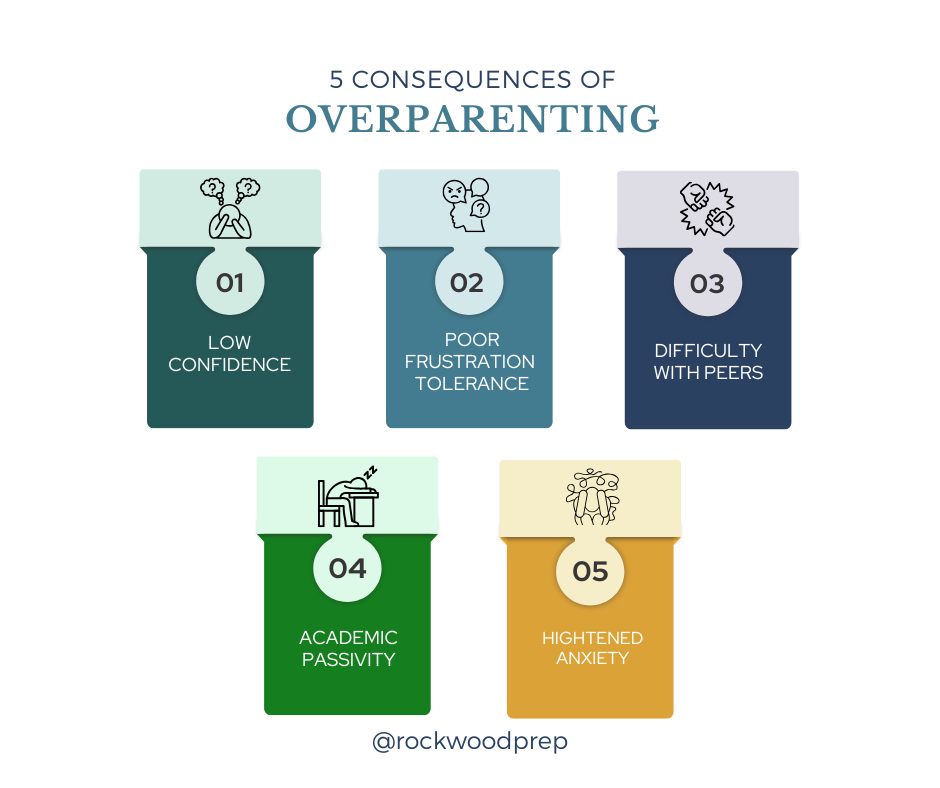
Children who grow up overly protected may face challenges that follow them into adolescence and adulthood. This chart shows five tough consequences for kids who live with over-sheltering, also known as overparenting.
Low confidence: They doubt their ability to manage on their own.
Poor frustration tolerance: Small setbacks lead to big emotions or avoidance.
Difficulty with peers: They may expect adults to solve social conflicts or struggle with resilience after rejection.
Academic passivity: They rely on adults for direction and reassurance instead of thinking independently.
Heightened anxiety: The world feels overwhelming or unsafe because they’ve had limited practice handling discomfort. If kids never get to “test drive” independence in small ways, the real world can feel far scarier than it is. It’s your job, as a parent, to give them opportunities, within reason, to fail or fly, without your intervention.
Special Considerations for Children with Learning Differences or Special Needs
Parents of children with autism, ADHD, dyslexia, or other learning differences often face a delicate balance. You naturally want to protect your child from discouragement, bullying, or sensory overwhelm. That’s why advocacy and structure are vital but so is allowing them to develop independence within their own abilities.
The truth is, sheltering these children too much can unintentionally communicate that they can’t do things for themselves. Research supports a middle path called, autonomy support. This is a space where parents guide, bridge, and encourage their children to take increasing responsibility for their own growth.
Example 1: Let a dyslexic child read aloud and praise effort, not perfection.
Example 2: Allow a child with ADHD to organize their backpack, even if it takes longer.
Example 3: Encourage a child with autism to order their own meal at a restaurant.
Each small moment of independence reinforces self-belief. The goal isn’t to remove support, it’s to adjust it as your child grows.
How Parents Can Foster Confidence and Independence
You can start creating independence right now, no matter your child’s age. Here are practical steps to help kids build confidence while still feeling supported. Start small by giving your child age-appropriate choices: which outfit to wear, what book to read, or what snack to pack. Choice-making fosters self-direction.
Encourage problem-solving. When your child faces a challenge, resist the urge to fix it. Instead, ask, “What do you think would help?” or “What’s another way we could try?” This builds problem-solving muscles and communicates trust in their ability to think.
Normalize failure. Failure isn’t the opposite of success. Failure is how we learn. Share your own stories of mistakes and what they taught you. When kids see failure as feedback, not finality, they take healthy risks.
Give responsibilities like daily chores with time management connected to them. One idea is to let them pack their own lunches, so they learn follow-through and accountability. Children thrive when they know their contributions matter, so give them a job!
Step back gradually so that your child doesn’t experience feelings of overwhelm. If your child asks for help, guide them instead of taking over. You could say, “I know you can start this, and I’ll check in when you’re done.” Gradual independence builds confidence.
Encourage safe risk-taking so that your child learns that they can do hard things. Whether it’s trying a new sport, speaking in front of a class, or inviting a new friend to play, challenge your child to stretch just beyond their comfort zone.
For neurodivergent children, independence looks different. Use visual schedules, small goals, or timers, but let them lead as much as possible. They gain a sense of control and pride in their abilities.
Model emotional regulation. Think of it this way… your calm becomes their compass. When they see you handle frustration or disappointment constructively, they learn emotional resilience by example.
You don’t have to choose between protecting your child and preparing them. The healthiest approach blends both connection with boundaries. Kids thrive when they feel both loved and trusted. Developmental psychologists call this authoritative parenting. High warmth, high expectations, and consistent support is a parenting style that is linked to better emotional health, academic performance, and confidence across cultures and ages (American Psychological Association).
The next time you feel the urge to step in, pause. Ask yourself: “Is this something my child could try on their own?” You might be surprised how capable they are when given the chance.
If you’ve ever watched your child interrupt conversations, grab a toy before asking, or melt down when told “not yet,” then you know how challenging impulse control can be. This is especially true for children with ADHD, autism, or other learning differences, but there are activities you can use to help your kids learn impulse control.
“Impulse control is a skill that takes time and consistent practice to develop, so we shouldn’t make it about good or bad behavior. Impulse control and about how a child’s brain processes information, emotions, and reward.” -Marci Gabriel
Understanding why impulsivity happens is the first step toward helping your child learn to pause, think, and choose differently. Keep reading to learn about the struggles children have with impulse control, the activities that you can use at home to help them overcome this challenge, and how ABA therapy can support you in your efforts.
Why Children Struggle with Impulse Control
The Brain’s Executive Function Is Still Developing
Impulse control is part of what psychologists, call executive function. Executive function is the brain’s management system that helps us plan, organize, and make decisions. These skills are governed by the prefrontal cortex, which continues developing well into early adulthood.
Children with ADHD, autism spectrum disorder (ASD), or learning disabilities often have differences in how their brains regulate dopamine, a neurotransmitter linked to reward and motivation. This makes it harder to pause before acting or to see delayed rewards as motivating.
These neurological factors are not a reflection of willpower they’re part of brain development.
Emotional Overload and Sensory Input
Impulse control can crumble when children feel overwhelmed by noise, crowds, transitions, or emotions they don’t yet know how to express. For children with autism or sensory processing differences, environments that are too bright, loud, or unpredictable can cause the nervous system to go into “fight or flight” mode, making impulsive behaviors like shouting, running away, or hitting more likely (Frontiers in Integrative Neuroscience, 2020).
Lack of Modeling or Practice Opportunities
Kids learn self-control by watching adults and through guided practice. When adults frequently intervene or overcorrect without teaching alternatives, children may miss the chance to develop internal control. However, impulse control can be taught through consistent, low-stress activities that build awareness, patience, and emotional regulation.
15 Activities That Help Kids Strengthen Impulse Control
1. The “Red Light, Green Light” Game:
Why it works: This classic game teaches waiting and response inhibition.
How it helps: Kids learn to pause when they hear “red light” and move only on “green light.” Add a “yellow light” for slower movement or a “blue light” for something silly (like spinning) to keep it fun and engaging.
2. “Simon Says”
Why it works: Improves focus and teaches kids to listen carefully before acting. Encourage your child to take turns being “Simon.” This develops leadership and builds awareness of rules and timing.
3. Freeze Dance
What to do: Play music and have your child dance. When the music stops, they freeze. This activity teaches body control, self-awareness, and response inhibition in a joyful, non-competitive way.
4. The Waiting Game
How it works: Practice short “wait times” during fun activities. For example, before giving a snack, say, “Let’s wait 10 seconds together.” Use a timer or count out loud. Gradually extend the waiting period as your child’s tolerance grows.
5. Storytelling for Self-Regulation
Read books where characters face temptations or challenges. We like Llama Llama Mad at Mama or What If Everybody Did That? children’s books. While reading, pause and ask: “What could they do instead?” or “How do you think they feel right now?”
This activity strengthens emotional literacy and the ability to imagine consequences before acting.
6. Breathing Breaks
Teach simple breathing exercises: “Smell the flower, blow out the candle.” Deep breathing helps activate the parasympathetic nervous system, calming emotional reactivity (Harvard Health Publishing).
7. Practice “Stop, Think, Act”
Create a visual cue like a stop sign magnet on the fridge. When your child feels impulsive, remind them to pause and identify how they feel before acting. Over time, this becomes an internalized self-talk habit.
8. Play Turn-Taking Board Games
Games like Candy Land, Chutes and Ladders, or Uno teach patience, waiting, and dealing with frustration. Don’t forget to praise your child for taking turns, following rules, or handling a loss calmly.
9. Use a Feelings Chart
Display a simple chart with faces representing emotions. Ask, “Which face are you right now?” or “What can help you move to calm?” This activity builds emotional vocabulary increases self-awareness, which supports better control over behavior.
10. Create Predictable Routines
Consistency reduces anxiety and helps children know what’s coming next. We suggest using visual schedules for neurodivergent children to lessen uncertainty and support smooth transitions.
11. Teach Mindfulness in Small Moments
Try one-minute mindfulness: “Let’s listen to every sound we can hear right now” or focus on sensations like “What does your chair feel like under you?” Mindfulness practices improve attention and impulse control in children (Journal of Applied School Psychology, 2019).
12. Practice “Do-Over” Moments
When an impulse leads to a problem, calmly say, “Let’s try that again.” Have your child re-enact the moment using self-control. This simple exercise turns mistakes into learning opportunities instead of punishments.
13. Encourage Physical Activity
Regular exercise improves dopamine regulation and executive function (American Journal of Play, 2018). Activities like martial arts, swimming, or yoga strengthen focus and self-discipline in fun ways.
14. Use Positive Reinforcement
Notice and praise small victories: “You waited your turn so patiently!” The idea is to reward effort, not perfection. Positive feedback helps wire the brain for continued self-regulation.
15. Model Calm Behavior
Children learn best by watching. Narrate your own self-control in real time: “I really wanted to yell, but I took a deep breath instead.” Modeling emotional regulation gives children a roadmap to follow.
ABA Therapy and How It Supports Impulse Control
Applied Behavior Analysis (ABA) is a research-based approach that helps children understand and manage their behavior through positive reinforcement and step-by-step learning. It’s especially effective for children with autism and other developmental differences.
ABA therapists use structured, supportive methods to teach impulse control, emotional regulation, communication, and social interaction. Over time, children learn to pause, make choices, and respond to situations with greater awareness and calm.
When families and schools work together, children make faster and more lasting progress. At Rockwood Prep in San Tan Valley, we believe that education isn’t just about academics it’s about helping every child grow emotionally, socially, and behaviorally.
Our programs include on-site ABA Therapy, for children who do not attend our private school. We focus on giving children individualized support to strengthen self-control, focus, and emotional regulation. Through collaboration between teachers, therapists, and parents, we reinforce what families are teaching at home by creating consistency, structure, and confidence for every child.
If your child struggles with dyslexia, ADHD, or autism spectrum disorder (ASD), the journey can sometimes feel overwhelming. The good news is that there are free resources for children with learning disabilities that can help families access information, tools, and even counseling at no cost.
Whether you’re a parent looking for dyslexia resources, or support for your student with ADHD, or specialized programs for children diagnosed with autism, this guide will point you toward trusted organizations and helpful tools.
At Rockwood Prep, we know that every child deserves the chance to succeed, regardless of their learning style. While schools and therapies may come with costs, these free resources available nationwide and here in Arizona can empower families to better understand and support their children.
Not every family has immediate access expensive programs and tutors, but knowledge, strategies, and support should never be out of reach.
That’s why free programs and organizations are so valuable. They provide:
Education for parents who want to understand their child’s diagnosis
Practical strategies for helping kids at home and school
Community connections with other families who share similar challenges
Support for children who may feel isolated or discouraged
Even small tools like free reading apps or webinars on executive function skills can make a huge difference in your child’s progress and confidence.
Free Resources for Dyslexia and Learning Disabilities
Here are some trusted organizations that provide free materials, guides, or support services nationwide:
1. International Dyslexia Association (IDA) offers a wealth of dyslexia resources for parents, including fact sheets, research articles, and free webinars. Their Dyslexia Handbook is especially helpful for families just beginning to navigate a new diagnosis.
2. Understood.org is a nonprofit dedicated to helping parents of children with learning and attention issues. It covers dyslexia, ADHD, autism, and more. You’ll find free toolkits, videos, and articles that explain learning challenges in parent-friendly language.
3. The Reading Rockets website provides free reading strategies, videos, and printable guides designed to help children with reading and spelling difficulties. Their resources are widely used by teachers and parents alike.
4. LD Online is one of the largest resources for families dealing with learning disabilities. Their site offers articles, personal stories, and expert advice on dyslexia, ADHD, and ASD. It’s a great starting point for parents seeking evidence-based information.
5. Children and Adults with Attention-Deficit/Hyperactivity Disorder (CHADD) is for families managing ADHD, CHADD provides free educational materials, webinars, and support group directories. Their resources help parents learn strategies for organization, focus, and self-regulation.
Arizona-Based Resources
While many resources are available nationwide, Arizona families also have access to free, local options that can make a big difference.
6. Encircle Families is an Arizona-based nonprofit offering free workshops, parent mentoring, and support for families of children with all types of learning differences. They are a lifeline for parents navigating special education services.
7. The Arizona Department of Education Exceptional Student Services department provides information on special education law, Individualized Education Plans (IEPs), and resources for families of children with learning disabilities. Understanding your rights and options is critical, and these guides are available at no cost.
8. Arizona public libraries including Phoenix, Mesa, Maricopa, and Pima County systems often host free reading programs, homework help, and literacy events. For children with dyslexia, these programs can provide additional exposure to books and language in a supportive setting.
Free Tools and Apps for Kids with Learning Disabilities
In addition to organizations, there are several free or freemium apps and digital tools that can support children’s learning at home.
NaturalReader: A free text-to-speech program that helps kids with dyslexia hear words while reading.
Learning Ally (limited free resources): Offers free sample audiobooks and reading guides for struggling readers.
Khan Academy Kids: A free educational app with lessons in reading, math, and executive function skills.
Nessy Reading and Spelling (trial): While not fully free, Nessy offers free resources and trials for parents exploring dyslexia-friendly programs.
SparkleBox: Find dyslexia teaching resources like visual tracking, auditory processing tools, and Rime charts.
YouTube: We like videos from Meet the Phonics, Meet the Sight Words, and Meet the Letters from Preschool Prep Company.
Using a combination of these tools can help children practice spelling, reading, and comprehension in a fun, engaging way.
Support for Parents
It’s not just children who need support. Parents of children with dyslexia and learning disabilities can also benefit from guidance, counseling, and connection. You don’t need to go through this journey feeling isolated. Have a look at these free resources that offer encouragement and clarity.
9. Parent Training and Information Centers (PTIs) Funded by the U.S. Department of Education, PTIs provide free workshops and guidance for parents navigating IEPs and school accommodations. You can find Arizona’s PTI through Center for Parent Information and Resources.
10. Don’t forget to ask about free parent information at Rockwood Prep. At Rockwood Prep, we believe that parents should have access to support as they explore options for their child’s education and therapy. That’s why we offer free parent counseling to families considering whether our school or ABA therapy services are right for them. This no-cost session gives parents the chance to ask questions, understand available support, and discover if Rockwood Prep is a good fit.
If you’re ready to take the next step in finding the right educational support, we’d love to meet you. Book a tour today or call 480-530-0886 to learn more about our dyslexia and learning disability support services.
When it comes to spelling, English grammar rules and exceptions can be especially difficult for children with dyslexia to understand. You know the rhyme: I before E except after C except when it isn’t. Look at words like science, society, or species carefully. What do you notice?
No wonder children with dyslexia struggle with spelling.
But with the right strategies and support, children can gain the tools they need to build spelling confidence and succeed in the classroom.
FACT: A high percentage of misspelled words, difficult-to-read handwriting, poor organization, a lack of fully developed ideas, and/or a lack of diverse vocabulary.
How Dyslexia Affects Spelling
Dyslexia profoundly affects the critical skills required for reading and spelling. Children with dyslexia may:
Struggle to break words into sounds (phonological processing)
Mix up letters or letter order (orthographic processing)
Have difficulty storing and recalling the visual patterns of words (visual memory)
Find it hard to apply traditional spelling rules
This means that simply seeing or hearing a word may not be enough for a child with dyslexia to learn how to spell it accurately. That’s why many families turn to structured interventions and dyslexia support services in Arizona to help their children succeed.
Strategies to Help Dyslexic Children with Spelling
1) Use Multisensory Learning: Children with dyslexia often learn best when multiple senses are engaged. Instead of just writing a word on paper, encourage activities like:
Tracing letters in sand or shaving cream
Using magnetic letters to build words
Saying each sound aloud while writing it down
Tactile and auditory reinforcement helps the brain create stronger connections.
2) Teach Spelling Patterns and Word Families: Instead of memorizing long lists, help your child focus on patterns.
ight words (light, night, fight)
tion endings (nation, station, vacation)
Prefixes and suffixes (un-, re-, -ed, -ing)
Understanding these recurring chunks reduces overwhelm and helps children decode new words more effectively.
3) Practice “Chunking” Words: Break longer words into smaller, more manageable parts. Below are two examples:
com–mu–ni–ca–tion
in–for–ma–tion
Chunking improves both spelling and reading fluency.
4) Use Technology Tools: Assistive technology can be a game-changer:
Speech-to-text software for writing assignments
Spelling apps designed for dyslexia (such as Nessy or Ghotit)
Audiobooks combined with printed text for word exposure
These tools allow children to access learning while still building their spelling skills. For many families, pairing technology with private schools for kids with dyslexia provides an extra layer of support and consistency.
5) Encourage Repetition and Overlearning: Children with dyslexia often need more repetition than their peers to master a word. Incorporating spelling into games, songs, or daily practice helps strengthen recall. Below are three game ideas:
Spelling scavenger hunts
Memory-matching word cards
Word of the day challenges
6) Celebrate Progress, Not Perfection: Spelling may always be more difficult for children with dyslexia, but that doesn’t mean they can’t succeed. Celebrate small wins like mastering a tricky word family or remembering a silent letter.
Confidence is one of the most powerful tools your child can have. -Marci Gabriel, CEO, Rockwood Preparatory Academy
Spelling doesn’t have to be a daily frustration. By using multisensory learning, focusing on patterns, leveraging technology, and celebrating progress, children with dyslexia can gain confidence and independence in their spelling journey.
At Rockwood Prep, we understand the unique challenges students with dyslexia face. Our structured environment, small class sizes, and tailored instruction make us a trusted choice for families seeking dyslexia support services in Arizona.
If you’d like to see how we can help your child thrive, we’d love to meet you.
Book a tour today or call 480-530-0886 to explore how Rockwood Prep can support your child’s success.
Dyslexia is a language-based learning disability. Dyslexia refers to a cluster of symptoms, which result in people having difficulties with specific language skills, particularly reading. Students with dyslexia usually experience difficulties with other language skills such as spelling, writing, and pronouncing words. Dyslexia affects individuals throughout their lives; however, its impact can change at different stages in a person’s life. It is referred to as a learning disability because dyslexia can make it very difficult for a student to succeed academically in the typical instructional environment, and in its more severe forms, will qualify a student for special education, special accommodations, or extra support services.
The issue of bullying in schools, especially for neurodivergent kids, has always been a cause for concern among families and educators. Recent trends suggest that it continues to be an ongoing problem, especially for children with autism, ADHD, dyslexia, and other learning differences.
Understanding the extent of bullying and its unique effects on the neurodivergent is crucial for families with young kids. This is the first important step in establishing safer and more supportive school environments.
TALKING POINT: Tell you child that if they know someone who is feeling hopeless, helpless, or thinking of suicide that they can call or text 988 for help
Imagine a scenario where your usually talkative child returns home from school withdrawn, avoiding conversation, and eye contact. While you suspect bullying, your child denies any such incidents.
Children often associate bullying with physical aggression like pushing and may not recognize what is happening to them. That’s why it’s essential to discuss the four common types of bullying with your child:
1. Physical bullying: such as hitting, kicking, pushing, or damaging belongings.
2. Verbal bullying: including name-calling, teasing, threats, or inappropriate comments.
3. Social or relational bullying: like spreading rumors, exclusion, or damaging a child’s reputation or friendships.
4. Cyberbullying: employing digital devices to harass, intimidate, or embarrass others.
Each form of bullying can have detrimental effects. Many are intensified for neurodivergent children due to challenges in social communication, sensory processing, or emotional regulation.
Impact of Bullying on Neurodivergent Kids
Children with conditions such as autism spectrum disorder (ASD), ADHD, or learning disabilities face a higher risk of being bullied. They also encounter misunderstandings from peers and adults alike.
Additionally, children with learning disabilities might face teasing for requiring additional support in the classroom. Communication difficulties can hinder their ability to report bullying incidents or express their emotions effectively.
The emotional repercussions of bullying can lead behaviors like anxiety, depression, low self-esteem, school avoidance, and declining academic performance, particularly for children struggling with sensory or emotional regulation issues.
FACT: Bullying is a form of youth violence. The Centers for Disease Control and Prevention defines this type of violence as any unwanted aggressive behavior(s) by another youth or group of youths, that involves an observed or perceived imbalance of power, and either is or likely to be repeated.
The Parents’ Role in Addressing Bullying
Parents of neurodivergent children have a crucial role to play in both preventing and responding to bullying situations. Here are some practical steps to take right away:
Initiate discussions early then start by asking open-ended questions about school and friendships regularly.
Watch out for warning signs like changes in mood, sleep patterns, eating habits, or academic performance.
Keep a record of bullying incidents, including details of occurrences and involved parties.
Communicate concerns with teachers, counselors, or school administrators.
Seek external support such as therapy or ABA services to help children develop coping mechanisms and self-advocacy skills.
Parents of children with Individualized Education Programs (IEPs) or 504 plans should ensure that anti-bullying measures and support strategies are incorporated into their child’s personalized plan.
School Initiatives for Supporting Neurodivergent Students
Schools that aim to support neurodivergent students must go beyond basic policies. Effective strategies include comprehensive anti-bullying education across the entire school community and specialized training. Programs promoting inclusion and empathy are also beneficial.
It is essential to train and designate staff members for handling bullying incidents and reports. Providing quiet or calming spaces for students needing emotional resets is crucial. Collaboration with families to address emotional and academic requirements is equally important.
At Rockwood Prep, we advocate for every child’s right to feel safe, acknowledged, and supported. Our educational approach prioritizes small class sizes, trained behavioral staff, and tailored autism support to facilitate the social and academic growth of neurodivergent learners.
When Should You Consider a Different School Environment?
If interventions do not alleviate your child’s struggles or if the school fails to address bullying adequately, it may be time to explore alternative educational options.
Rockwood Prep caters to neurodivergent children by offering academic assistance and social-emotional tools for students aged 8 to 18. Our environment is specifically tailored to support children with autism, ADHD, learning disabilities, dyslexia, and other developmental diversities.
If you have concerns about your child’s school environment, reach out to us today to learn more about how Rockwood Prep can help your student. Together, we can work towards creating a safer and more empathetic future for every child.
Every child develops at their own pace, but when a 4-year-old consistently displays social, behavioral, or communication differences, parents may question if these could be early indicators of autism.
Detecting autism, or autism spectrum disorder, early on is crucial for accessing effective interventions, specialized education, and supportive therapies.
In this article, we dissect the signs of autism in preschoolers using current research from government and academic sources. We will delve into the complexities of social interaction, communication, and sensory processing, as well as provide guidance for concerned parents.
What is Autism Spectrum Disorder (ASD)?
Autism Spectrum Disorder (ASD) is characterized by difficulties in social communication, repetitive behaviors, and narrow interests. The Centers for Disease Control and Prevention (CDC) reports that about 1 in 36 children in the U.S. is diagnosed with autism by age 8, with early diagnosis rates improving due to heightened awareness and screening efforts.
Children with ASD often perceive and process information differently, affecting their interactions with others and daily routines. Signs may emerge as early as 18 months but usually become more apparent by age 3-4.
Developmental Area
Common Autism Indicators at Age 4
Social Interaction
Limited eye contact, doesn’t initiate play, appears uninterested in peers
Communication
Delayed speech, echolalia (repeating words), flat tone or unusual rhythm
Behavior
Repetitive movements (hand-flapping, spinning), distress with routine changes
Sensory
Over- or under-reactivity to light, noise, or textures
Play
Lack of pretend play or rigid, repetitive play patterns
Case Study: Recognizing Subtle Signs
Let’s look at this example: At the age of 4, Liam demonstrated strong memory skills but tended to avoid eye contact and preferred solitary play.
Initially dismissed as shyness by his parents, Liam’s preschool teacher observed his lack of engagement in pretend play and distress over minor routine changes.
Following a comprehensive evaluation, Liam received an ASD diagnosis. With early speech and occupational therapy, he made significant progress in communication and coping skills by age 5.
Not all signs of autism are overt or disruptive; many are subtle and require attention from both parents and educators.
The Rise in Autism
There is an increase in autism, but it’s not what you think. The main reason for the increase is improved screening and awareness. The CDC’s Autism and Developmental Disabilities Monitoring (ADDM) Network notes a steady uptick in diagnoses, particularly in regions where early screening accessibility has enhanced.
Contributing factors to earlier diagnoses include regular screenings at pediatric visits, better tools for identifying autism in girls and children of color, and broader diagnostic criteria recognizing a wider array of symptoms.
Differences in Social Skills
While most 4-year-olds enjoy pretend play and group activities, those with autism may find these social interactions challenging. Common behaviors include:
difficulty understanding others’ emotions
limited interest in group play
and engaging alongside rather than with peers (parallel play).
These behaviors do not signify a lack of empathy but rather difficulties in expressing or interpreting social cues in typical ways.
Challenges in Communication for Children with Autism
Communication difficulties often manifest as one of the primary and noticeable signs of autism in 4-year-olds.
These children might fail to respond to their name, avoid verbal exchanges, only repeat phrases, or struggle with interpreting gestures and facial expressions. Some may resort to alternative communication methods like pointing, guiding adults by hand, or using picture boards.
If a child isn’t meeting communication milestones by age 4, consulting a pediatrician for a developmental evaluation is recommended, as early speech-language interventions can be highly beneficial.
Sensory Processing in Young Children with Autism
Many autistic children process sensory stimuli differently. Some may react to loud noises by covering their ears, rejecting specific textures, or exhibiting a fascination with spinning objects.
While it is normal for children to demonstrate little quirks or unique interests, persistent social and communication delays or behaviors disrupting daily life should result in an evaluation.
Red flags to discuss with a pediatrician or other ABA therapist, include:
limited or absent speech by age 4
avoidance of eye contact
disinterest in peers or pretend play
extreme reactions to sensory stimuli
fixation on routines or unusual interests
The Diagnostic and Evaluation Process
A formal autism diagnosis necessitates a developmental evaluation typically conducted by a pediatric neurologist, psychologist, or developmental-behavioral therapist. For children under age 5, the Arizona Early Intervention Program (AzEIP) offers evaluations and services.
Public school districts are also mandated to provide evaluations under the Individuals with Disabilities Education Act (IDEA) for school-age children.
Diverse Impacts of Autism on Young Children
Autism is a spectrum disorder, meaning signs and support requirements vary widely.
Research from the National Institutes of Health (NIH) indicates that children with co-occurring conditions like ADHD or intellectual disability often need comprehensive support. “High-functioning” children may still struggle with social nuances or emotional regulation, while those with learning disabilities or non-verbal individuals may benefit from intensive therapies and structured educational settings.
If you suspect your 4-year-old is displaying signs of autism, early evaluation and intervention can significantly influence their development and quality of life.