
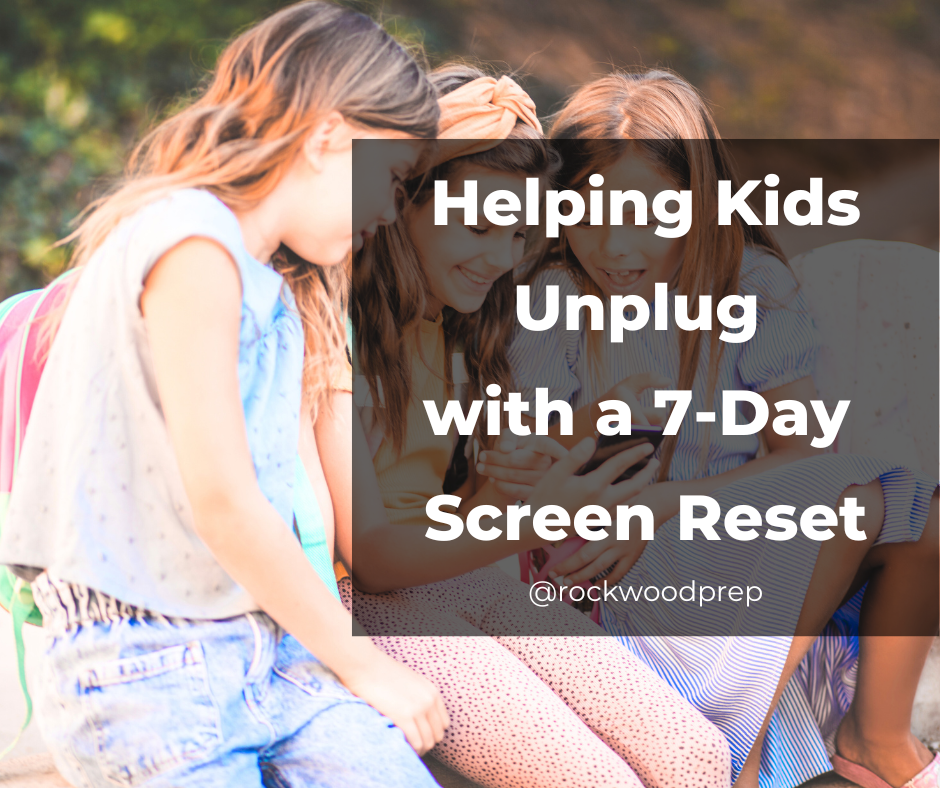
You’ve seen it before. You ask your child to put down their phone or tablet and it’s nothing but frustration and melt downs. Screens are now an integral part everyday life. School work, entertainment, and social connections all happen online. But when screen time starts taking over sleep time, outdoor play, family time, and learning, many parents begin to worry.
Children between the ages of 8 and 14 are especially vulnerable to developing unhealthy screen habits. This is a critical time when their brains are still developing skills like focus, emotional regulation, and impulse control. Helping kids build balanced technology habits now can make a lasting difference in their mental health, sleep, and academic success.
Small changes at home can help reset screen habits and teach kids how to use technology responsibly.
What the Experts Say About Screen Time
Recent studies give a reason for parents to be concerned about too much screen time. That’s because the impact of excessive screen time on children’s sleep, attention, and emotional well-being is real and problematic.
FACT: Common Sense Media found that tweens (ages 8–12) spend an average of 5 hours per day on screens for entertainment, while teens average over 7 hours daily.
Sleep is often one of the first things affected when screentime takes over. A study published by the Sleep Foundation found that children who use screens before bedtime get less sleep and experience more difficulty falling asleep, largely because the blue light from devices interferes with the body’s natural sleep hormone, melatonin.
Even more importantly, mental health can be impacted by all that screen staring. Research from the National Institutes of Health (NIH) has linked excessive screen use in adolescents with higher rates of anxiety, depression, and emotional distress.
This isn’t to say that screens are inherently bad, but it does mean children need your guidance and vigilance to learn healthy boundaries.
Signs Your Child May Need a Break from the Screen
Parents are usually the first to start noticing some subtle changes before they realize that screen habits are likely a big part of the problem. Some common signs that your child needs a break from screen time include:
- irritability when devices are taken away
- difficulty falling asleep
- trouble focusing on homework
- or a growing preference for screens over hobbies, friends, or family time
If you notice some, or all, of these patterns, a short “screen reset” can help kids break the habit and rebuild healthier routines.
The 7-Day Screen Reset for Kids
A full detox is not what we generally recommend because it is too painful and not realistic. Instead, set reasonable goals to reset habits and show children that screens are just one part of a happy, balanced life.
Day 1: Awareness
Start with a family conversation about screen habits. Ask your child how much time they think they spend on devices and what they enjoy doing online. Creating awareness helps kids feel involved in the process rather than punished.
Day 2: Move Screens Out of Bedrooms
One of the most powerful changes parents can make is removing devices from bedrooms at night. Charging phones and tablets in a shared family space supports better sleep and helps provide a safety net for your child.
Day 3: Replace the Habit Loop
Children often reach for screens out of habit. Replace that habit with something engaging like going outside, building something, drawing, reading, or playing a game together.
Day 4: Set Clear Family Tech Boundaries
Choose a few consistent rules for the household. For example: try having no screens during meals, no devices an hour before bedtime, and homework always come before entertainment.
Day 5: Encourage Outdoor Activity
Movement and fresh air naturally regulate mood and attention. Even a short walk, bike ride, or backyard play session can reset the brain after long periods of screen use.
Day 6: Let Kids Experience Healthy Boredom
In the good old days, boredom often led to creativity. When children don’t automatically turn to a device, they start exploring other interests.
Day 7: Build a Sustainable Screen Plan
Work together to decide how screens will fit into daily life going forward. The goal is balance… not perfection.
Screen Time and Neurodivergent Kids: What Parents Should Know
For children with ADHD, autism, or other learning differences, screens can be especially appealing because they provide instant stimulation and predictable feedback.
While many neurodivergent children enjoy technology, transitions away from screens may be harder. Two strategies that often help are visual schedules and clear transition warnings. Letting a child know that they have “five more minutes” before turning off a device can reduce frustration and make the transition smoother.
It’s also helpful to replace screen time with activities that meet the same needs, such as building, drawing, hands-on projects, or movement.
Helping Kids Build Healthy Screen Habits
Remember that the goal isn’t to eliminate technology. Taking time to build healthy screen habits now ensures that your child is more likely to develop a balanced relationship with technology.
TIP: Kids do best when they see adults modeling healthy behavior. When families prioritize shared activities, conversation, outdoor play, and creativity, screens naturally become just a small part of a much bigger picture.
Many parents are surprised to find that once the initial reset happens, kids rediscover interests they had forgotten. Activities like sports, art, reading, building, or imaginative play become important again.
What Screen Balance Means for School Success
Healthy screen habits don’t just improve sleep and mood they also support learning.
Children who sleep well are more interested in moving their bodies. Physical activity reduces the need for digital distractions so that it’s easier for them to focus, regulate their emotions, and stay engaged in the classroom.
At Rockwood Prep Academy, we see how the right environment, learning structure, and professional support can help students build the skills they need to thrive academically and personally.
That’s why we published this article. We know that if we can help children and families find balance with technology. it is one more step toward helping them grow into confident, capable learners.

