
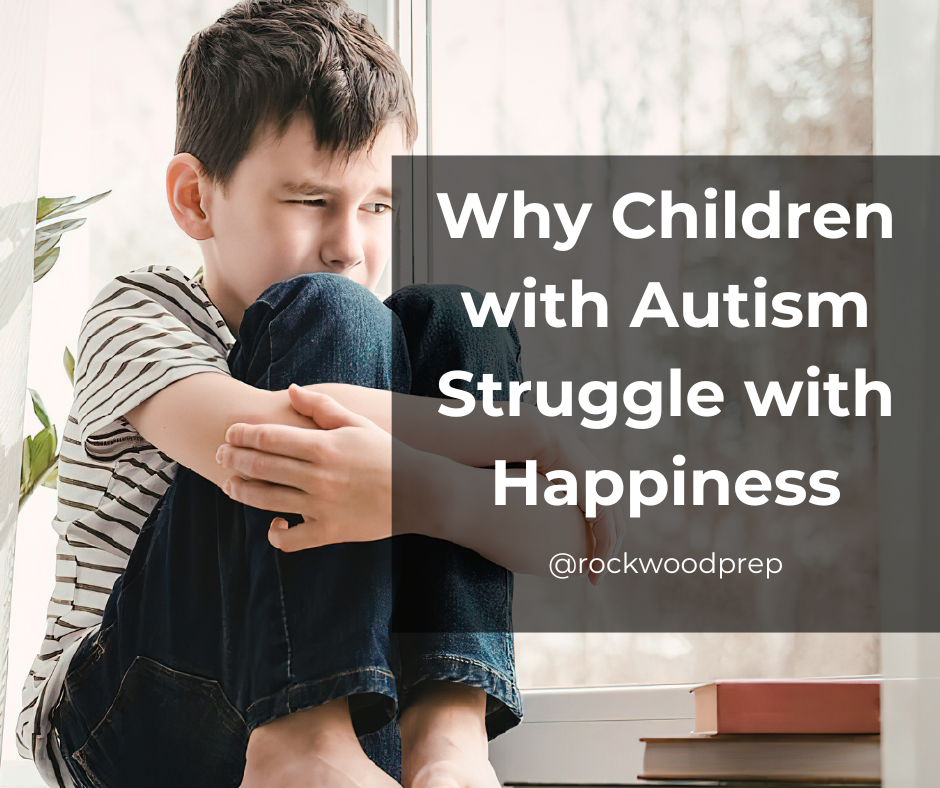
“Happiness can look different for every child and that’s especially true for children on the autism spectrum. Our goal isn’t to force a version of happiness that doesn’t fit, but to help each child feel safe, understood, and confident in who they are.” -Marci Gabriel, CEO of ABA Connections | Rockwood Prep
If you’re a parent, it can be difficult to watch your child wrestle socially, emotionally, or behaviorally especially during the pre-teen and teen years, when self-awareness increases and peer relationships become more complex.
You may find yourself wondering: Why does my child seem unhappy? or What can I do to help them feel better?
The answer is not always simple. But understanding the unique challenges your child faces is a compassionate and powerful first step.
Why Happiness Can Feel Harder for Children with Autism
Children on the autism spectrum are just as capable of happiness are other children, but they often experience the world in ways that make it harder to tap into that emotion consistently.
Research from the Centers for Disease Control and Prevention notes that autistic children are more likely to experience anxiety, depression, and social challenges compared to their peers.
These experiences can shape how kids view themselves and the world around them. Some of the most common challenges include:
Social differences: These children often face the difficulty of reading social cues or maintaining friendships and this can lead to feelings of isolation and bullying.
Sensory sensitivities: Overstimulation from noise, lights, or environments can create chronic stress in children with autism.
Communication barriers: Struggling to express needs or emotions can lead to frustration, disappointment and mistrust.
Increased self-awareness: As children grow, they usually begin to recognize that there are differences from themselves and others. For pre-teens and teens, this awareness can be especially heavy. They may want to “fit in” but not know how and can become easily exhausted from trying.
The Emotional Side of Autism
Sometimes it’s easy to focus on a child’s more troubling behaviors like meltdowns, withdrawals, or frustrations, but underneath those behaviors is often a child who is overwhelmed, misunderstood, or emotionally dysregulated.
FACT: According to research published in the National Institutes of Health, many autistic individuals experience differences in emotional regulation and stress response systems, which can make everyday challenges feel more intense.
This means your child may feel emotions more deeply or for longer periods of time. They may also have difficulty calming down once they’re overwhelmed, or struggle to identify or label what they’re feeling.
TIP: When behavior feels “big,” try asking: What is my child experiencing right now? instead of How do I stop this behavior? This small shift can change how you respond and how supported and understood your child feels.
Happiness Doesn’t Always Look the Same for Everyone
One of the most important shifts parents can make is redefining what happiness may look like for their child. For some, happiness may not be found in large social groups, constant go, go and ongoing excitement.
Instead, happiness may look like a deep focus on something or a favorite interest. It could also be the quiet comfort of predictable routines, or just one or two meaningful connections.
FACT: Research highlighted by the Autism Speaks emphasizes the importance of individualized support and environments that align with a child’s strengths and preferences.
Let’s stop trying to push children toward a version of happiness that doesn’t fit them that can only increase stress and decrease confidence.
The Hidden Risk of Self-Esteem and Emotional Health
As children move into adolescence, emotional well-being becomes even more important. Autistic pre-teens and teens are at a higher risk for:
- Low self-esteem
- Anxiety and depression
- Social withdrawal
- And in some cases, self-harm behaviors
These behaviors are not because something is wrong with them, it’s because they are often navigating a world that doesn’t naturally accommodate how they think, feel, or interact.
Feeling misunderstood over time can lead to internalized beliefs that lead them to think that they are different in a bad way, or that they don’t belong.
Helping your child build a strong sense of identity and self-worth is one of the most protective things you can do.
5 Things Parents Can Do to Support Happiness and Resilience
There is no single thing that you can do to create happiness for your child, but there are consistent ways to help them feel more secure, confident, and emotionally balanced.
1. Focus on Connection Before Correction
Children are more open to learning when they feel understood, so take time to:
- Validate their feelings
- Listen without immediately jumping in to solve the problem
- Be present in their interests
Even small moments of connection can build emotional safety.
2. Support Emotional Awareness
Many autistic children need help identifying what they feel. You can model this by:
- Naming emotions out loud
- Using a simple scale of low, medium, or high feelings
- Connecting physical sensations to emotions
Over time, this builds emotional strength and reduces frustration.
3. Create Predictable, Safe Environments
Consistency reduces anxiety. This might include:
- Clear routines
- Preparing for transitions
- Giving advance notice for changes
TIP: Predictability isn’t rigidity. Instead, predictability is ensuring that your child knows what to expect and feels prepared.
4. Encourage Strengths and Interests
Hyper-focused, special interests are not distractions. Often, special interests are a powerful source of joy and confidence. Lean into them by:
- Making time for those interests daily
- Using them as a bridge to learning or social interaction
- Celebrating progress in those areas
Confidence grows when children feel competent and capable.
5. Teach Coping Skills, Not Perfection
Your child doesn’t need to be happy all the time. Instead, focus on helping them:
- Recover from difficult moments
- Build coping strategies
- Understand that emotions come and go
Resilience is built through support, not by avoiding challenges.
You’re Doing Your Best to Understand Your Child
If your child seems unhappy at times, it doesn’t mean you’re doing something wrong. Unhappiness could signal that your child is working through the challenges of a complex world, or that they need support in ways that may look different from other children.
Another thing to consider is that happiness for children with autism doesn’t mean that you should be remove every challenge they face. Your job is to help your child feel safe, valued, and capable within the challenges that surround them.
Over time, this kind of foundation can lead to something even more important than happiness alone:
a deep, lasting sense of confidence in who they are right now.

