
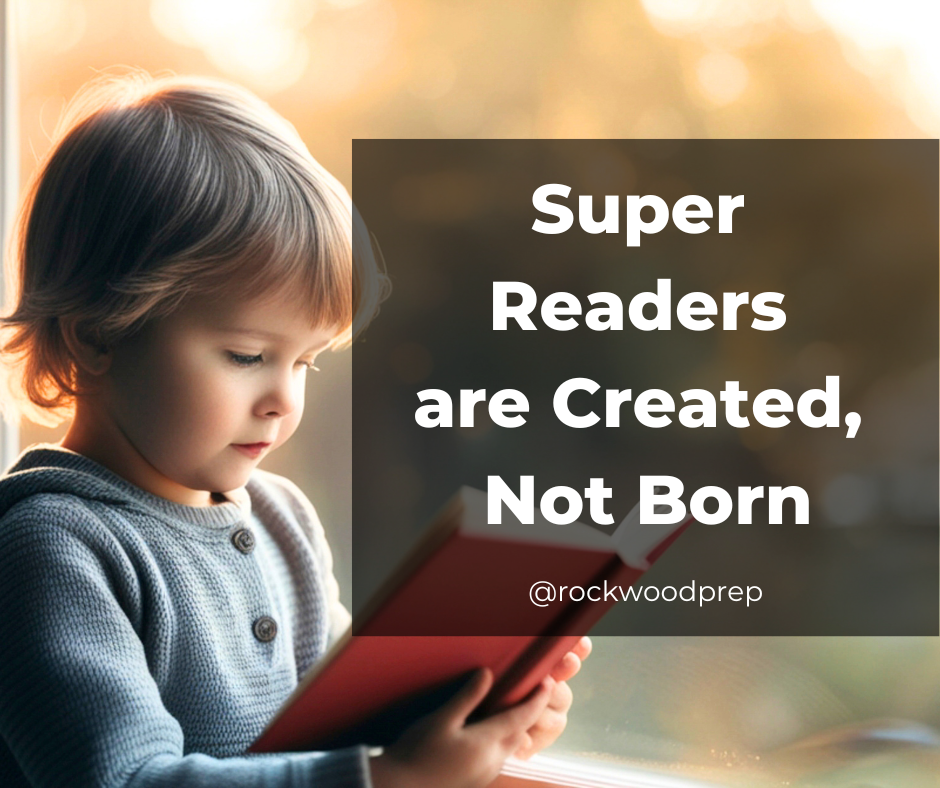
Some children gobble up books before kindergarten. Others would rather build with Legos, climb a tree, or take apart a robot than sit down with a chapter book. Neither approach to learning nor reading is wrong.
Reading is a long journey, and every child begins in a different place. We want parents to know that super readers are not born; instead, they are created through curiosity, confidence, encouragement, and joyful experiences while learning.
At Rockwood Prep Academy, we believe children don’t have to learn the same way to love learning. Our job isn’t to raise the fastest reader in the classroom… it’s to foster a joyful, lifelong learner.
Why Reading Looks Different for Some Children
For most children, reading comes easily. For others, it takes more time, support, and creativity. Developing readers may learn differently, struggle with attention and focus, miss foundational reading skills along the way, or simply need movement and hands-on experiences to stay engaged. Reading can also feel overwhelming when children begin comparing themselves to their peers.
When reading becomes a source of frustration, children may begin to believe they are “not readers.” One of the most important gifts we can give our children is helping them understand that becoming a reader isn’t about speed or perfection. It’s about discovering that stories, learning, and curiosity belong to them too.
Confidence often comes before competence. Children who believe they are readers are much more willing to become readers.
Building the Foundations of a Super Reader
Most of the time we begin with the book when we should begin with the child. What makes your child’s eyes light up? Sharks? Space? Baking? Sports? Dinosaurs? Magic tricks? Robotics?
Begin there.
Children are much more likely to become engaged readers when reading feels like an extension of something they already love. A child who isn’t interested in reading may simply not be interested in what they’re being asked to read.
Research tells us that reading aloud continues to be valuable throughout elementary school. Listening to stories strengthens vocabulary, improves comprehension skills, and creates meaningful moments of connection. Reading together doesn’t stop being important simply because a child is learning to read independently.
Audiobooks are another wonderful tool for developing readers. They expose children to rich language and allow them to enjoy stories that may still be beyond their independent reading level. Listening while following along with a printed book can strengthen both confidence and comprehension.
You might be surprised to learn that reading comic books and picture books are equally valuable. They encourage children to connect illustrations with text, infer meaning from facial expressions and context clues, and follow the sequence of a story. They books are not shortcuts to literacy, but they are pathways to it.
So, yes, reading Lego instructions counts. So do joke books, children’s cookbooks, magazines, and books about their favorite hobbies.
TIP: Don’t choose books based solely on grade level recommendations. Choose books based on your child’s interests. Passion is often the doorway to literacy.
Make Reading an Adventure
Reading doesn’t always happen sitting quietly at a desk. It may happen in a blanket fort with a flashlight, while listening to an audiobook and coloring.
Children learn differently, and that’s something worth celebrating.
Try creating family reading rituals. Spend fifteen minutes reading together before bed. Visit the library regularly and allow your child to choose books that spark their curiosity. Read recipes together while cooking or encourage dramatic readings of favorite stories.
Children need to have more joyful experiences with reading. This makes them more likely to see the task as something they get to do rather than something they must do.
Myths About Reading
There are too many misconceptions about what successful reading should look like. We think that:
- Good readers do not only read chapter books. Illustrative novels, comic books, audiobooks, and nonfiction books are all valuable tools for building literacy skills.
- Reading does not always happen independently. Reading together remains beneficial throughout childhood.
- Children do not need to sit perfectly still to become successful readers. Many children learn best when movement is part of the experience.
- Developing readers do not all follow the same timeline. There is no one way to become a reader.
How to Help Your Reader to Find Success
Sometimes the greatest obstacle to reading isn’t ability. It’s confidence.
Celebrating effort over speed and praising curiosity over perfection is a great way to keep your child interested in reading. Try to avoid comparing siblings or classmates and remember that progress isn’t always measured by how many pages a child reads in one sitting.
Some parents find success in letting their child revisit favorite books. There is tremendous value in rereading stories they love. Familiarity builds confidence, and confidence encourages growth.
“Let them quit the book. As adults, we don’t finish every book we begin, and children shouldn’t have to either. If your child isn’t enjoying a book after giving it a fair chance, let them choose another one. Sometimes finding the right book is all it takes to create a lifelong reader.” – Marci Gabriel, CEO, Rockwood Prep Academy and ABA Connections of Arizona
Raising a Happy Reader
There is no one way to become a reader. Some children arrive there through chapter books and others through comic books, audiobooks, recipes, mysteries, and adventures. The path may look different for every child, but every child deserves the opportunity to discover that learning can be joyful.
If your child isn’t falling asleep with a chapter book under their pillow just yet, that’s okay.
If they would rather read Pokémon cards, laugh at comic books, listen to audiobooks while building with Legos, or ask you to read the same story for the hundredth time, that’s okay too.
Reading is not a race, and childhood is not a competition.
Super readers are not created in a day. They are created in the quiet moments when children feel capable, curious, and connected to learning. Those moments often become the foundation for a lifetime of joyful reading.
At Rockwood Prep Academy, we believe every child is wonderfully designed to learn.
Children don’t have to learn the same way to love learning. When we nurture confidence, curiosity, and connection, we aren’t simply teaching children how to read. We’re helping them become lifelong learners.
For children who may also struggle with attention, self-regulation, or learning challenges that affect their educational experience, additional support can make a meaningful difference. Our partners at ABA Connections provide individualized ABA therapy services that help children build the skills and confidence they need to thrive at home, at school, and in their communities.

