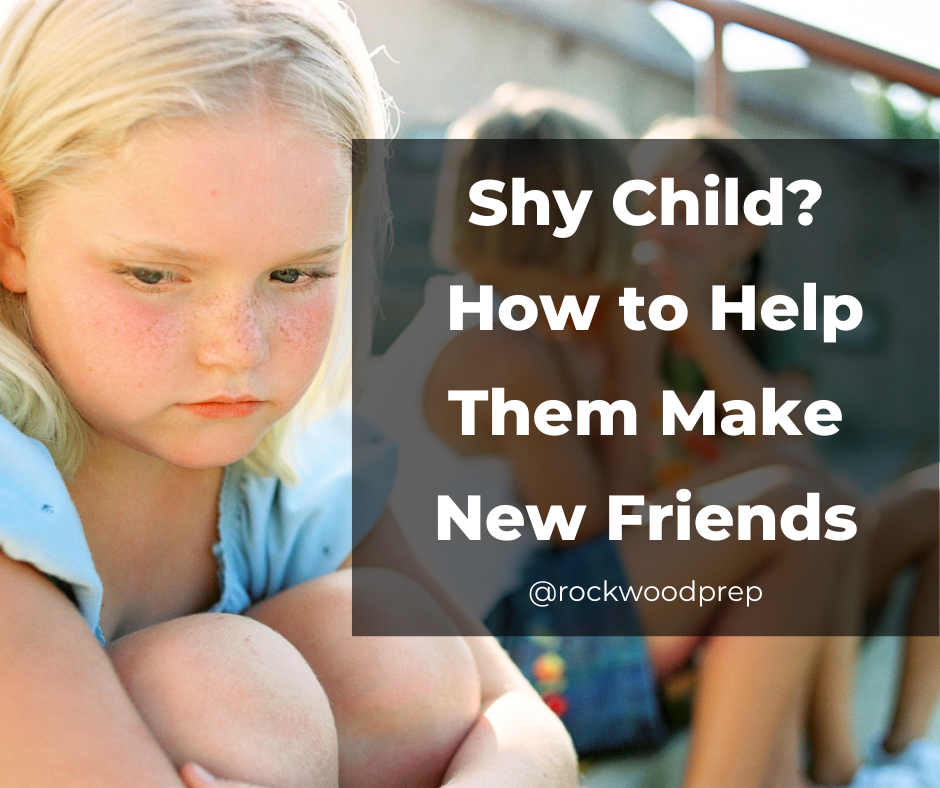
School just started and you have some concerns about your shy child making friends this year. Shyness can be a tough one to overcome. It is often characterized by feelings of fear, stress, and discomfort in social situations.
When attention is directed at a shy person, that person exhibits physical symptoms of stress: accelerated heartbeat, sweating and trembling, and sometimes blushing.
Some factors may increase shyness, such as social rejection and ridicule from other children. Adolescence is a particularly vulnerable time, in which shyness may intensify. In adolescence, as a normal part of the identity-formation process, children can be very concerned about what others think about them.
If your child is shy and has a history of learning differences like ADHD, autism, or dyslexia, making those first friendship connections can feel especially intimidating. For these children building friendships often takes extra time, encouragement, and practice.
TIP: Social confidence and making new friends is a skill that can be learned.
Why Friendships Can Be More Challenging for Shy Kids
Every child is different, but many students with learning differences experience additional obstacles that make friendships even more difficult to build.
Some children are hesitant to start conversations because they worry about saying the wrong thing. Others struggle to read facial expressions, understand body language, or recognize when someone wants to join or leave a conversation.
Children with ADHD may be loud, interrupt, appear bossy, or become overly excited during play, while children on the autism spectrum may have difficulty understanding unwritten social rules. Even children with dyslexia or other learning disabilities sometimes avoid social situations because they worry classmates will notice their academic struggles.
None of these challenges mean a child cannot develop lasting friendships. Instead focus more on opportunities to learn and practice social skills in a supportive environment.
Shyness or Something More?
Parents often wonder whether their child is simply shy or experiencing a deeper social challenge.
A shy child usually wants friends but needs extra time to warm up in unfamiliar situations. They may stand aside to observe before joining a group or feel nervous introducing themselves to new classmates.
Children with learning differences may also want friendships but need explicit instruction in social communication, conversation skills, emotional regulation, or understanding social cues. Recognizing the difference allows parents and educators to provide the right kind of support.
Friendship Doesn’t Always Mean Having Lots of Friends
One of the biggest misconceptions is that successful children have large groups of friends. Many children are happiest with one or two close, trusted friends.
Helping your child develop one meaningful friendship is often more valuable than encouraging them to become the most popular child in class. Strong friendships provide confidence, emotional support, and a sense of belonging that can positively affect every part of the school experience.
Small Steps Build Big Confidence
Making friends rarely happens overnight. Instead of focusing on the end goal, celebrate small victories that help build confidence. Frame these small steps and encourage your child to set one goal each day. Here’s a checklist of ideas:
__ Say hello to one new classmate.
__ Ask someone to play at recess.
__ Share a favorite hobby or interest.
__ Practice taking turns during a game.
__ Invite a classmate to work together on a classroom activity.
Each positive interaction helps children feel more comfortable reaching out again the next time.
Ways Parents Can Encourage Friendships at Home
Before your shy student ever walks into a classroom, know that you play an important role in helping them develop social confidence.
Below are five simple activities that you can do at home that make a meaningful difference.
- Practice introducing yourself during family conversations.
- Role-play how to ask someone to play or how to join a group already playing a game.
- Read books that feature positive friendships and discuss how characters solve disagreements or show kindness.
- Encourage your child to participate in activities they genuinely enjoy, whether that’s robotics, art, music, martial arts, or another hobby. Shared interests naturally create opportunities for conversation and connection.
- Perhaps most importantly, praise effort rather than outcomes. Celebrate your child for introducing themselves, trying something new, or showing kindness, even if a friendship doesn’t develop immediately.
How ABA Therapy Can Help Build Social Skills
For some children, social skills benefit from direct instruction and guided practice. Applied Behavior Analysis (ABA) therapy helps many children learn the building blocks of successful friendships by teaching skills that may not develop naturally.
ABA therapists can work with children on:
- Starting and maintaining conversations
- Reading facial expressions and body language
- Taking turns during play
- Sharing and cooperating
- Managing frustration during disagreements
- Understanding personal space
- Developing flexible thinking during games and group activities
These skills are practiced in structured, encouraging environments and then generalized to real-life situations at school, at home, and in the community.
Over time, many children become more confident approaching peers and navigating everyday social situations.
The Rockwood Prep Difference
At Rockwood Prep, we know that learning extends far beyond academics.
“Our small class sizes give teachers the opportunity to truly know each student and recognize when they may need encouragement socially as well as academically. Students are surrounded by caring educators who understand learning differences and create opportunities for positive peer interactions throughout the school day.” – Marci Gabriel, CEO Rockwood Prep Academy and ABA Connections
When appropriate, ABA strategies can also support students in strengthening communication, emotional regulation, and friendship skills, helping them become more confident both inside and outside the classroom.
Every Child Deserves to Belong
The beginning of a new school year offers more than a fresh backpack and a new classroom. A new school year is a new opportunity for growth, connection, and discovering that friendships often begin with one small conversation.
TIP” If your child struggles socially, remember that friendships are not simply a matter of personality. They are skills that can be nurtured with patience, practice, and the right support.
At Rockwood Prep, we believe every child deserves to feel seen, valued, and included. Through individualized learning, compassionate educators, and a supportive school community, we help students build the confidence they need to succeed both academically and socially.
Ready to learn more?
Schedule a tour of Rockwood Prep to discover how our personalized approach and ABA-informed support help students with learning differences thrive in the classroom, on the playground, and beyond.